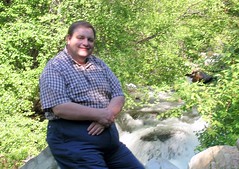
I have learned some more about the youth center, since my last visit. It is privately owned, by Horizon Health Corporation. Youth are placed in the center by their parents, or they can be placed into the facility by the Juvenile Court System. Treatment options include: substance abuse rehabilitation, behavioral modification programs, and treatment for many forms of mental illness and learning disabilities. I learned that the average stay is something between 4 and 6 months. They also provide education as well, and are a fully accredited private high school, recognized by the State. Like most treatment centers, the success rate is unfortunately rather low. Only about 30% of the residents will be able to avoid getting into trouble again.
This is a "secure, residential" facility. That translates to: they live at the center, and are locked in. Typically youth enrolled at the center have tried other treatment programs, (such as outpatient programs) and have failed. They generally have become disruptive to the point that they can no longer function in the home environment. (That is if they have a home environment at all!) Here are some examples of the kinds of behaviors that are treated at Copper Hills Youth Center:
- Lying, covert behavior, stealing
- Extreme oppositional or defiant responses to peers and/or parents
- Explosiveness or uncontrolled rages of anger
- Evidence of substance abuse or dependency
- Inability to control aggressiveness, cruelty, and physical acting out
- Impulsive behavior resulting in self harm
- Runaway behavior which gives evidence of self-destructive behaviors
- Destruction of property
- Evidence of ritualistic behaviors
- Boys Residential Treatment
- Girls Residential Treatment
- Bridges & Gateways Sexual Offender Residential Treatment
- Arches-A program for Asperger's Syndrome
I recently spoke at the Utah Boys Ranch, where they have a fully functioning LDS branch. They have regular sacrament and priesthood meetings. The branch presidency can interview the boys and have week-night activities with them (even off-campus activities). They have full-time church service missionaries who spend all day at the boys ranch. At the Boys Ranch, the boys can still work on their scouting and Aaronic Priesthood goals as well. Of course, the whole environment is different at the Boys Ranch. Religious training and instruction is not just a Sunday offering, but is an integral part of the program.
As I see it, the Copper Hills Youth Center treats those who have previously failed other treatment programs. Those who fail at Copper Hills may find themselves going back to another lock-down treatment facility, or even to the Juvenile Corrections System (Youth Jail) if the situation is serious enough. For some at Copper Hills, their only alternatives were Copper Hills Youth Center -- or Jail.
For the Sunday services, it is necessary to teach the same lesson, 4 times. There are two reasons for this. Space is a problem. They only have a conference room in which to meet. It can comfortably hold about 20 people. The other reason for needing to teach 4 different sessions, is that the various groups are not allowed to inter-mix. Attendance at Sunday Services is completely voluntary. Since it is an inter-faith Christian Service, we only use scriptures from the Bible. However, it is OK to teach LDS interpretation of the Bible. I would say that about ½ of the attendees at the Sunday services were LDS. Many brought their own various versions of the Bible with them. I created a handout with the scriptures that we would use in the lesson pre-printed, and numbered. That way anyone could help with reading scriptures, whether the had a Bible or not.
It was interesting to see the various groups come through. Each group was a little different from the others. My lesson plan was flexible enough that we could fit the lesson to the needs of each group. We probably had a total of 30-40 residents in attendance on Sunday.
When you find yourself face-to-face with these young people, you have to suspend all your judgments of them. They all have serious problems in their lives. Some have committed some serious offenses (sex offenders), and have damaged the lives of others. Some I'm sure, have been victims of abuse themselves. However, I found that you have to take a non-judgmental approach when teaching them. I am not their Judge, the Savior is. How would He have me approach them -- with love and compassion, not condemnation. My job is to help them have a desire to come unto the Savior, that they can be strengthened, and find forgiveness. That they may gain a measure of peace, solace, and spiritual strength in their troubled lives. When you go in there, and think about having to give the same 30-minute lesson four times, it may seem like a daunting task. However, each session went by quickly. The time was up before I knew it. I felt like we did some good, and were able to offer some spiritual nurturance to these young people.
This assignment usually only comes up once a year for me, so I probably won't visit there again until at least a year from now. I consider it an endeavor well worth-while.